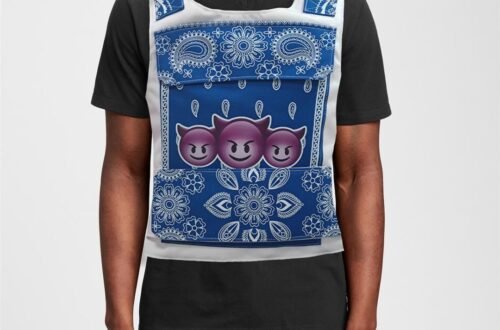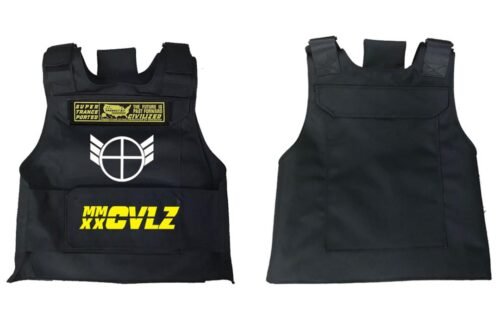
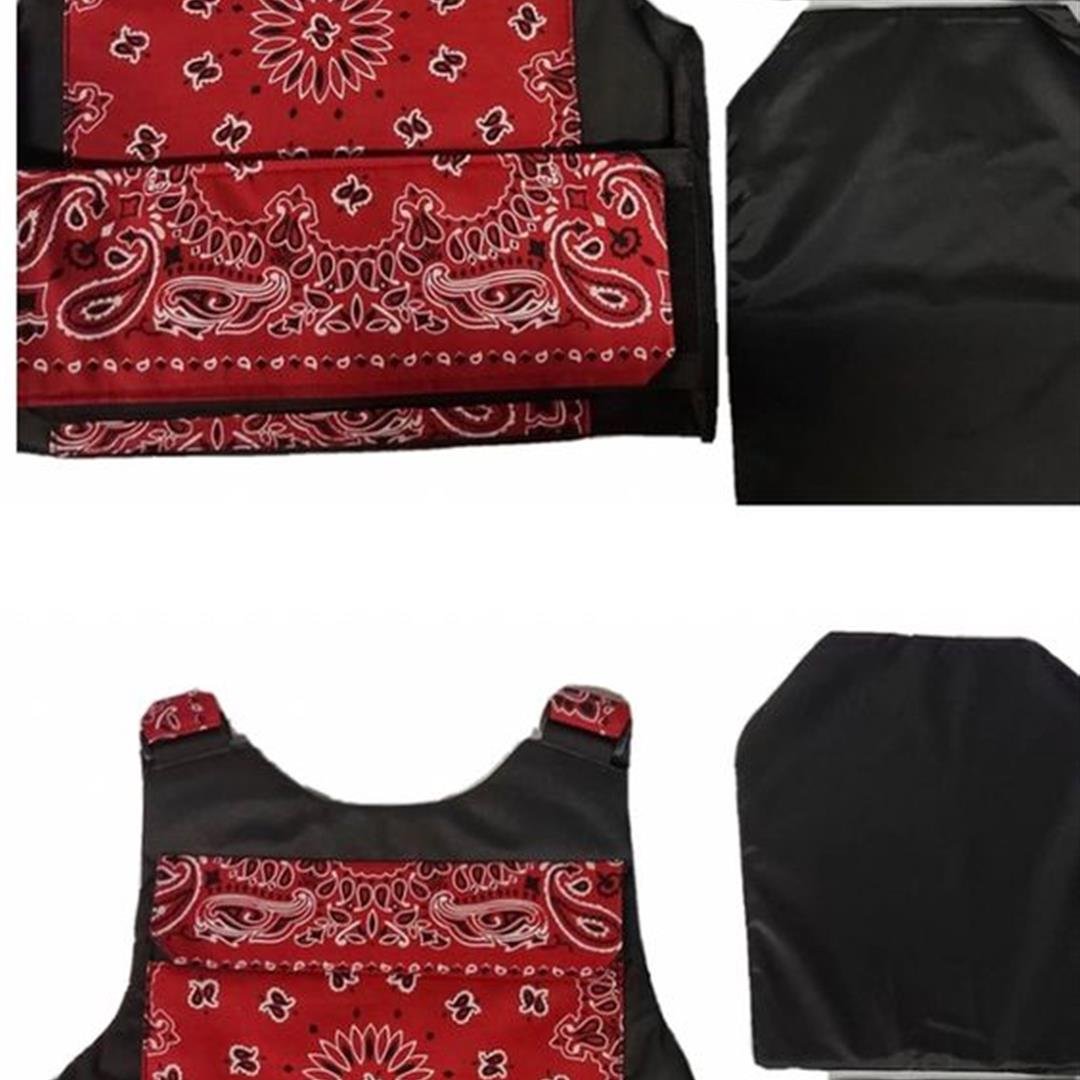
Some patterns come and go. Paisley never leaves. That teardrop-and-vine motif, borrowed from Persian boteh weaving and popularized through the bandanas of the American West, has cycled through punk, hip-hop, western wear, and festival fashion for over a century — and every time it comes back, it comes back louder. Right now it is having another moment, and one of the most interesting places it has landed is on a garment nobody expected: the tactical vest. The red bandana vest you see above is exactly the kind of piece that happens when workwear structure meets a print that refuses to be quiet. This guide breaks down why the paisley bandana look works on a tactical chassis, how to style it, and how to make one that is genuinely yours.
Why Paisley Never Left the Rotation
Patterns that survive do so because they do three jobs at once. Paisley is dense enough to read as texture from ten feet away and as detail from one foot away, which means it photographs well and ages well up close. Its red-black-white palette is high contrast, so it survives printing on heavy fabric without turning muddy. And it carries cultural weight — bandana prints signal rebellion, western heritage, and street credibility all at once, depending on who is wearing them.
A tactical vest amplifies all three. The structured panels act like a picture frame for the print, the heavy canvas or cordura gives the pattern a physical weight that a thin tee never could, and the black trim on the chassis grounds the busiest parts of the design. The result reads intentional rather than costume: the silhouette says utility, the print says personality, and the combination is exactly what modern streetwear keeps chasing.
Full Print vs. Accent Panels: Two Ways to Build It
There are two schools of paisley vest design, and the vest above shows both in one piece. The first approach is the full accent panel: the entire front pocket area wrapped in the bandana print, bordered by black webbing and hardware. This is the louder option, and it works because the rest of the vest stays neutral — black body, black straps, plain surfaces. The print gets one large stage and the eye knows exactly where to look.
The second approach is the reverse: a solid vest with small paisley touches — a pocket flap, a strap keeper, a patch on the loop field. This is the smarter buy if the vest needs to serve multiple settings. A full bandana front owns a festival crowd; a paisley pocket flap works at a car meet and a Thursday night out equally well. When you design yours, decide the primary setting first, then commit: the most common mistake is splitting the difference and ending up with a vest that is too loud for daily wear and too quiet for the stage.
Pairing the Print With the Rest of the Fit
Red bandana print is a dominant color story, so everything around it should support rather than compete. Black is the obvious anchor and it is why black-trimmed paisley vests photograph so cleanly — black hoodies, black denim, black sneakers all let the print carry the outfit. White tees underneath keep the red crisp. Grey works if you want the print to do the talking without going full blackout, which is a look we covered in the all-black stealth guide from the opposite direction.
Resist the urge to add a second loud pattern. Paisley plus camo plus stripes reads chaotic; paisley plus solid reads curated. If you want more visual interest, add it through texture and hardware instead — matte buckles, contrast stitching, a morale patch with metallic thread. Those small swaps add depth without fighting the pattern for attention.
Making It Yours: Patches, Panels, and Personal Marks
Here is the real advantage of running a bandana print on a tactical chassis instead of a printed tee: the vest keeps its customization surface. Loop fields still take patches, pocket flaps still take embroidery, and the MOLLE webbing still carries pouches. A name tape across the chest, a hometown area code on a patch, or a club logo on the back panel turns a store-bought-looking print into a one-of-one piece. Our patch layout guide walks through placement if you want the print and the patches to share the vest without crowding each other.
Custom printing takes it further. Because the pattern is applied to the panel before assembly, you can shift the palette — the same teardrop motif in navy and cream reads western heritage, in purple and gold reads festival glam, in monochrome reads almost subtle. Same pattern, three completely different vests.
Built for More Than the Photograph
A print this bold gets bought for the look, but the vest format is what keeps it in rotation. Padded shoulders make an all-day festival comfortable. Zip pockets secure a phone, wallet, and keys when you are in a crowd with your hands full. Removable panels and adjustable straps mean the fit adapts from a hoodie underneath in October to a tee in June. The paisley vest above is not a costume piece that lives on a hanger — it is structured like the gear it borrows from, which is precisely why people who buy one keep wearing it. If you are new to the format, the breakdown of how tactical vest sizing and adjustment works covers getting the fit right before you commit to a print.
Design Your Paisley Piece
Bandana paisley has outlasted every trend that tried to replace it, and putting it on a tactical vest is the freshest interpretation of it right now. Pick your palette, choose full panel or accent placement, leave room on the loop field for the patches that make it yours, and build it on a chassis with real pockets and real structure. Head to markyourvibe.com, open the customizer, and put a century-old pattern on gear that is built for the next one. Your gear, your rules.
Frequently Asked Questions
Why does paisley work on a tactical vest?
Paisley is a high-contrast all-over pattern built from curves, so it softens the hard rectangles of webbing and pocket flaps. The vest supplies structure while the print supplies movement, and two qualities that usually cancel each other out end up reinforcing one another. A red bandana print over black hardware is the classic combination.
Should paisley cover the whole vest or just part of it?
An all-over print is the statement version and photographs best; accent panels are easier to wear every week. The practical middle ground is a printed front with solid shoulders, collar and back, which keeps the pattern visible while leaving clean space for a patch, name tape or team logo over the top.
What should I wear under a paisley tactical vest?
Keep everything else plain and neutral. Black, charcoal, olive or raw denim underneath lets the print carry the outfit, while a second competing pattern reads as costume. Because paisley already supplies the colour, keep footwear and headwear solid and let one small accessory echo the print.
Do printed tactical vests hold up to real use?
They do when printed on a base built to carry load. Look for reinforced stitching at the stress points, webbing that actually bears weight, and a dye process that bonds into the fabric rather than sitting on the surface, so the pattern will not crack along fold lines. Wash cold, inside out, and line dry to protect the print.
Can I put a logo or patch on top of a paisley print?
Yes, but placement matters more on a busy field. Put the mark on a solid pocket flap or a hook-and-loop panel instead of directly over dense detail, or add a plain backing panel so the logo has negative space to read. MarkYourVibe produces every vest to order in New York, USA and ships to all 50 US states.