A boutique hotel shift rarely stays in one place. A concierge starts at the desk, ends up in the rain helping with bags, and is back for a VIP arrival ten minutes later. Event staff cross between a ballroom, a loading dock, and a terrace — all while looking calm and polished.
What is a custom tactical vest for hospitality teams?
A hospitality vest is a printed utility vest worn over a hotel uniform that keeps a radio, room keys, phone, pen and notepad on the body during lobby, ballroom or terrace shifts while hands stay free for guests. MarkYourVibe prints each vest to order in New York, NY with a 1-vest minimum and ships to all 50 US states.
- A hotel shift touches about 6 carry items — radio, room keys, phone, pen, notepad and spare badge — and a vest gives each one a fixed pocket.
- High-frequency items sit on the upper chest and sides, reachable without breaking stride in a busy lobby or ballroom.
- Hook-and-loop role patches let a concierge, banquet captain and terrace runner read as one team across 3 departments.
- The minimum order is 1 vest, so a single concierge can prototype the layout before the whole property orders.
A hospitality vest works when the 5 things a staff member reaches for every hour stay on the body, and the hands stay free for the guest.
Last updated: November 28, 2026 · By the MarkYourVibe team, New York, NY
That is the gap a custom tactical vest fills: a place for the small things that keep a shift running, and a clear signal of every role, without turning the uniform into a costume.
Why Hospitality Needs a Working Vest
Hotel uniforms are cut for a clean line, not for a radio, a room key, a phone, a pen, and a request scribbled on a receipt. Staff end up juggling those items in their hands or in pockets never designed for daily use.
A vest spreads the weight across the torso, leaves the arms free, and goes on over a shirt or polo in seconds. In a busy lobby, a consistent vest also answers the guest’s first question — who here can help — before anyone asks.
Map the Shift Before the Pockets
The best layout comes from watching a real shift, not from copying a military loadout. List what each role actually reaches for every hour.
A concierge needs a flat pocket for tickets and reservations, a secure slot for a phone, and somewhere to park a pen. A front-desk runner wants room keys and a notepad within easy reach. Banquet staff need a radio, tape, a spare badge, and a compact flashlight for a dark corridor. Terrace crews think about wristbands and sun protection.
Put high-frequency items on the upper chest and sides, where they can be reached without breaking stride. Keep the back panel quiet for staff who lean against a desk or sit for part of a shift. Resist the urge to clip on every pouch you own; a crowded vest slows people down and looks untidy in a guest-facing space. If you are kitting out a whole property, our team orders guide covers sizing and branding across different body types.
Color in a Front-of-House Uniform
Hospitality color decisions are delicate. The vest has to sit beside the hotel’s palette and still hold up under warm lobby lights, terrace sun, and a back hallway’s cold fluorescents.
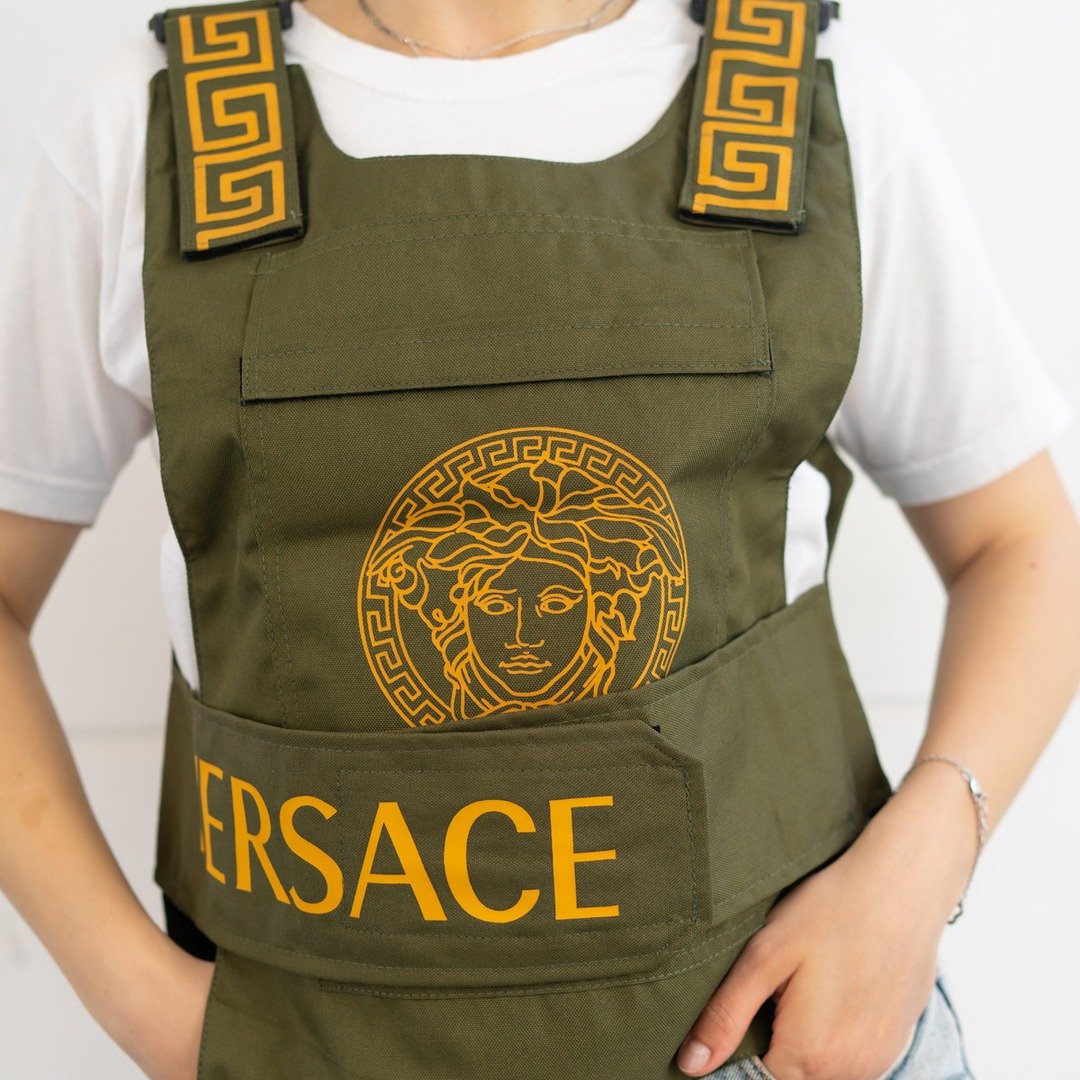
Deep olive, charcoal, and warm tan are reliable anchors. They read as considered rather than utilitarian and hide the scuffs of a long day. A gold or brass-toned accent, like the border and emblem on this olive vest, adds a heritage note that works well in boutique properties and historic buildings. One strong panel or a single line of trim is enough; a large logo rarely improves a guest-facing look.
If the property prefers an understated palette, our notes on quiet luxury design explain why small details carry more weight than bold marks. Avoid very pale fronts in guest-facing roles — makeup, coffee, and rain all find them eventually.
Roles, Names, and the Guest Experience
Guests rarely remember job titles, but they remember whether someone helped them. A small patch with a first name or a role label makes that interaction easier. “Concierge,” “Events,” or “Guest Services” tells a visitor where to go with a question, and a name makes the answer feel personal.
Keep the property mark large enough to read across a lobby, then repeat the role smaller on the chest or shoulder. Flat colors and simple lettering survive phone cameras and low light far better than fine gradients or tiny type. Think about the whole week, not just one shift: the same vest may be worn at morning check-in, an evening reception, and a weekend event.
One Set Across Many Job Titles
Hotels mix departments, and a uniform program has to respect that. One vest platform can serve them all if the branding is planned carefully.
Give every department the same base vest and pocket structure, then differentiate with a small role patch or a color-coded trim. The property looks unified, guests can still find the right person, and replacements stay simple because a spare from another department still fits the program. Order a few extras in the most common sizes: turnover is real, and a new hire should not spend their first week without the gear that makes the job easier.
Comfort and Care Through a Long Shift
Eight or ten hours of standing and reaching will expose any bad design decision. Check how the vest sits over the base layer, especially at the shoulders and under the arms. Adjustable straps help staff of different heights get the same fit, and flat chest panels matter more than deep pockets for anyone behind a counter.
Ask two or three people to wear a sample for a full shift before the larger order arrives. The feedback you get after hour seven is the feedback that counts.
Vests pick up coffee, perfume, rain, and the occasional spilled drink. Spot-clean marks at the end of a shift, air-dry away from direct heat, and check stitching every few weeks. Rotate them among staff and store them hung or flat in a dry room.
A Uniform That Works as Hard as the Team
The right hospitality vest is not about looking tactical. It is about giving people a dependable place for their tools, a clear signal of who they are, and a look that belongs in the room.
Your gear, your rules — from the morning arrival to the last guest of the night.
Ready to build yours? Start designing at MARKYOURVIBE.
Custom tactical vests for boutique hotels and hospitality crews at a glance
| Made to order in | New York, NY, United States |
|---|---|
| Minimum order | 1 vest — no minimum quantity |
| Best worn over | Hotel polo, shirt or banquet uniform |
| Everyday carry | Radio, room keys, phone, pen, notepad, spare badge |
| Patches | Role patches for concierge, banquet and terrace crews |
| Ships to | All 50 US states |
Frequently asked questions
What is a custom tactical vest for hospitality teams?
It is a printed utility vest worn over a hotel uniform that keeps a radio, room keys, phone, pen and notepad on the body during lobby, ballroom or terrace shifts while hands stay free for guests. MarkYourVibe prints each vest to order in New York, NY with a 1-vest minimum and ships to all 50 US states.
What should hotel staff carry on a vest?
Start with the 5 items every role reaches for hourly: a radio, room keys, a phone, a pen and a notepad for guest requests. Banquet staff add tape, a spare badge and a compact flashlight. Give each item a fixed pocket so hands stay free for guests. MarkYourVibe prints pocket layouts to order in New York, NY with a 1-vest minimum.
Can a whole hotel order matching vests?
Yes. MarkYourVibe has a 1-vest minimum, so a 40-person property and a single concierge use the same ordering process. Properties usually fix one base color, print the hotel name on the chest and assign role patches per department, then reorder single vests as seasonal staff join. Prints sit on panels, so reorders match the original design year after year.
How do you keep vests consistent across front-of-house roles?
Standardize 3 elements once — base color, chest print and pocket layout — then let role patches carry the differences. Because MarkYourVibe prints on panels, a concierge, a banquet captain and a terrace runner read as one team while their patches show who does what, and new hires only need a patch to match the roster.
How do you care for a hospitality vest between shifts?
Close every hook-and-loop patch and pocket, spot-clean coffee or drink marks with cool water, and air-dry the vest away from direct heat. Panel prints tolerate cool water far better than hot cycles. Check stitching every 2 or 3 weeks and hang vests in a dry room between rotations.