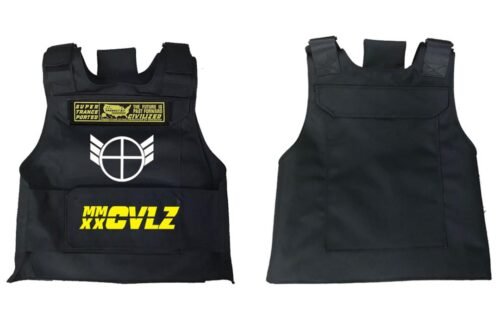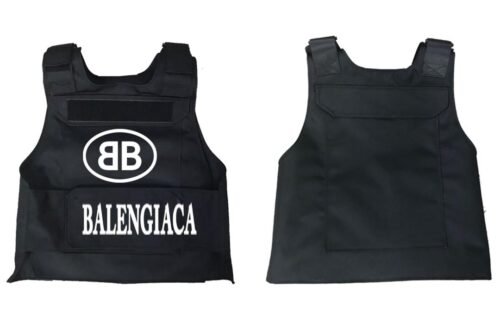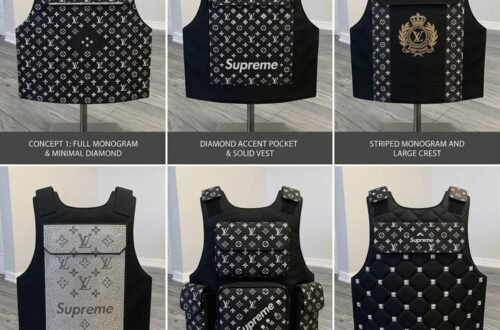

Horse sport is one of the last places where heraldry still does real work. A stable has colours. A hunt club has a crest. A racing syndicate has a shield or a horse’s head worked into everything from saddle pads to jacket buttons. Then you walk to the barn at 5 a.m. and find the crew in a borrowed polo three sizes too big and a hi-vis tabard that says nothing about who they are. A custom vest closes that gap: it carries the crest properly, holds the radio and credentials a working day requires, and looks like part of the team instead of an afterthought.
Why the paddock is harder on gear than it looks
A show day is a dust environment with a schedule. You move between stable, warm-up ring, gate and collecting ring, usually carrying something, usually with gloves on, often while a 1,200-pound animal decides it has opinions about standing still.
That rules out most ordinary workwear. Shoulder bags swing into a horse’s flank. Belt pouches rotate and snag. Lanyards get grabbed. Flimsy polo pockets dump a phone into the shavings the first time you jog alongside a trotting horse. What survives is a fitted vest with flat, zipped, one-hand-reachable pockets and nothing hanging loose below the waist — plus a mesh back panel, because a vest should not turn into a sauna on an eight-hour outdoor shift.
The crest is the uniform, so treat it like one
Colours read at distance before faces do. If your club runs navy and gold, the vest should be navy and gold, not navy and whatever the printer had in stock. Two rules keep a crest legible:
- One colour on the crest itself. A single-colour crest — white on navy, gold on black — survives embroidery, screen print and velcro without turning to mush.
- Keep it shield-sized. Four to five inches wide on the left chest reads at 20 feet. Shrink it to a 2-inch badge and it becomes a smudge from the rail.
Where the crest sits matters as much as its size. Our patch layout playbook covers placements in detail; the short version for equestrian kit is crest on the left chest, stable or sponsor name across the back yoke, and a name strip on the front right so stewards can identify staff without asking.
If your club’s mark is more illustrated than heraldic — a horse head, crossed crops, a jumping silhouette — the approach in our mascot graphics guide applies directly: three shapes, two colours, so it still reads when stitched 3 inches wide.
What a barn, gate or hospitality crew actually carries
Build the pocket map from the job, not from a generic vest template. What works for most equestrian crews:
- Radio in a chest pocket deep enough that the antenna clears the top edge
- Credentials in a clear-window pocket at chest height, readable by a steward without undoing anything
- Phone in a zipped pocket on the side opposite the radio
- Gloves, lip balm, hair ties in a small utility pocket — the items that vanish most often
- Pen and order-of-go sheet in a flat document pocket that will not fold in half
- A compact first-aid pouch: plasters, saline wipe, tape
What should not be on the vest: anything hanging from a clip, or a water bottle swinging at the hip. If you are leading a horse, that swinging mass is a hazard, not storage.
Fabric, fit and layering for a long day outdoors
Match the shell to the season rather than buying one vest for the whole calendar.
- Summer shows and July race meets: polyester mesh body, light nylon yoke
- Spring and autumn: 500D nylon front panels, mesh back, so it holds shape under a light jacket
- Winter work and night checks: heavier 1000D or coated shell, reflective piping at the shoulders if the yard has no floodlights
Sizing is where most club orders go wrong. Measure over the layer the vest will actually be worn on — usually a polo plus a light gilet — and add roughly 2 inches to the chest measurement. Adjustable side straps cover the difference between a 5-foot-4 groom and a 6-foot-2 head lad without two separate patterns; our sizing guide has the full routine. Also move closure hardware to the front or use low-profile side adjusters, since a hard buckle at the lower back digs in the moment anyone leans over a horse.
Sponsor panels pay for the uniform
Equestrian events run on sponsorship, and sponsor logos change every season. Sewing them straight onto a vest makes the order obsolete the moment a deal ends. Velcro-backed panels solve it: the base vest carries the club crest, the sponsor patch swaps event to event, and each new sponsor is a patch instead of a reprint. It is also the cheapest way to keep a mixed crew consistent — staff in club vests, volunteers in the same shell with an event patch, hospitality in a different colour panel.
How to design a club vest in five steps
- Fix the colour pair first. Two colours taken from existing silks or saddle cloth. Everything else follows.
- Pick the simplest version of your crest. One colour, three shapes, readable across a ring.
- Map pockets to tasks. Radio, credentials and phone are non-negotiable; the rest depends on whether the crew grooms, gates or hosts.
- Choose one shell per season. Do not compromise on a fabric that is wrong for half your events.
- Order a small trial run. Four vests on the crew working the hardest days, then adjust before the full order.
Ready to build yours
Whether you are outfitting a racing syndicate, a hunt club, a riding school or a derby-day hospitality team, the vest should carry your crest like it belongs there and hold the kit your crew actually uses. Start with the size of the job, not the size of the logo.
Design your club’s vest at markyourvibe.com — Your Gear, Your Rules.
Frequently Asked Questions
Why do equestrian crews wear tactical vests instead of polo shirts?
A working show day involves radios, credentials, hoof picks, gloves, phones and sunscreen, and none of it fits safely in a polo pocket. A fitted vest keeps those items in flat, zipped pockets that stay reachable one-handed, and it does not swing into a horse’s flank the way a shoulder bag or lanyard can.
Where should a stable crest go on a custom vest?
Put the crest on the left chest at eye level so it reads at distance, and use the back panel for the stable name or a larger version of the same mark. Keeping the crest to one focal area makes the vest look like a uniform instead of a souvenir, and it lets sponsor panels sit lower without competing with the crest.
What should a barn or gate crew carry in a vest?
Carry the radio, credentials or gate pass, phone, gloves, a hoof pick or multi-tool, sunscreen and a small first-aid item. Everything should sit above the waist in zipped pockets, because anything hanging loose below the belt line can snag on fencing, gates or tack.
How do you keep a vest comfortable on a long outdoor show day?
Choose a breathable base fabric with a mesh back panel, size the vest to layer over a polo or light jacket, and keep the front closures easy to open when the temperature climbs. A vest that vents at the back stays usable through an eight-hour shift instead of turning into a sauna.
Can MarkYourVibe print sponsor panels and club crests in bulk?
Yes. MarkYourVibe makes custom tactical vests to order for stables, hunt clubs and derby crews, with crest and sponsor artwork printed in fixed positions so every vest matches. There is no minimum order quantity, so a single crew vest and a full team run get the same print quality.
Before you order: Artwork Guide · Size Guide
Ready to design your own?
Upload your artwork, preview it on the vest, and order one piece or a matching set.
Ordering for a team? Request a team quote.