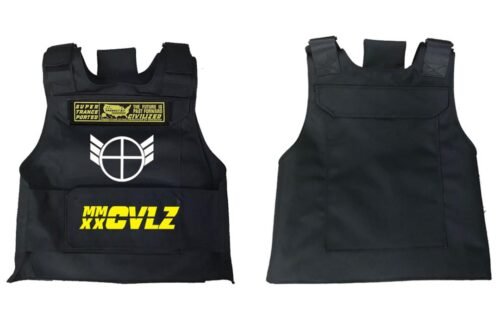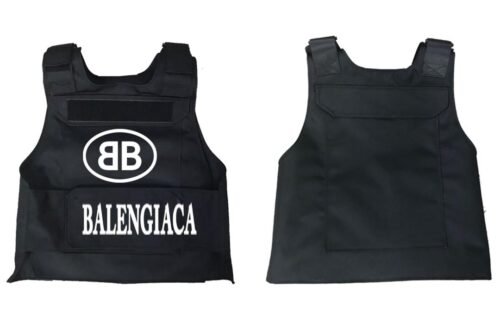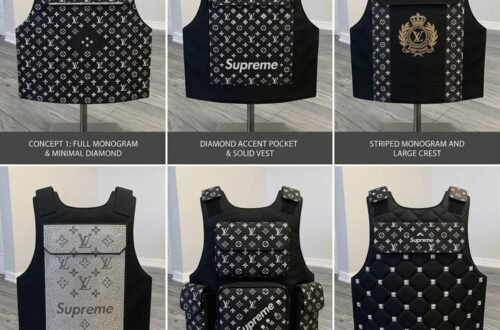
Every paintball player knows the rental ritual: a vest or harness that fits somebody, but not you, adjusted with straps that were cranked by the last three strangers who sweated into it. Pods rattle loose. The squeegee goes somewhere different every game. By the third match you are carrying more gear in your hands than on your body. A custom tactical vest ends that ritual — it fits your frame, carries exactly the load you actually use, and carries your team’s look instead of the field’s loaner.
Why paintball punishes generic gear
Paintball is a sprint-slide-crouch sport wearing a loadout. You dive behind a bunker, drop a knee, reload by feel, and sprint again — all while a mask limits your downward vision. Gear that works for hiking or range days fails here for three reasons:
- Bounce. A loose pod slides out on the first hard cut and takes your paint with it.
- Snag. Anything dangling — a lanyard, a loose strap, a dump pouch half-open — catches on bunker edges and branches.
- Heat. A full vest with no airflow turns a summer scenario game into a heat-stress test.
A vest built for you fixes all three: tight elastic retention on every pod, nothing hanging below the waistline, and a mesh or vented back panel so air actually moves. If you want to go deeper on attachment layout, our MOLLE webbing guide walks through placement row by row.
The paintball loadout, mapped to the vest
Before you design anything, empty your pockets and count what you actually carry on a game day. Most players land on this kit, and each item has a natural home on a vest:
- Four to six pods, split across the front: two on your strong side for fast pulls, the rest on the weak side. Pods sit at a slight forward angle so your hand finds them without looking down past your mask.
- Squeegee or barrel swab in a dedicated vertical sleeve on the chest or shoulder strap — the one piece of kit you need fastest when a ball breaks, so it never lives in a pocket.
- Barrel sock on the front chest panel. Referees check for it the second the game ends; it should be reachable in one motion.
- Radio or phone in a zipped chest pocket for scenario and woodsball players coordinating across the field.
- Water — a small bladder or a bottle sleeve, because a two-hour scenario game with no hydration ends badly.
The rule that keeps it all usable: everything you grab in-game lives between your waist and your collarbone, on your strong-hand side. Everything else gets zipped or left in the staging area.
Speedball vs. woodsball: two different vests
The same base vest serves both, but the setup should not be identical.
Speedball is fast, close and hot. You want a stripped-down front: three or four pods max, a barrel sock, nothing on your back but a vent panel, because you spend the game flat against bunkers and sliding on your spine. Extra weight on the back panel catches on every bunker you squeeze past. Bright accents and bold graphics matter here too — speedball is as much a spectator sport as a competition, and a clean, aggressive vest reads well on field livestreams.
Woodsball and scenario play reward capacity. More pods, a radio pocket, a hydration sleeve, sometimes a map or mission card in a clear sleeve on the forearm or chest. Muted colors that match your team’s palette. Games run longer, so weight distribution matters: keep the heaviest items high and centered, or your lower back will file a complaint by hour three.
Your team’s identity, sewn in
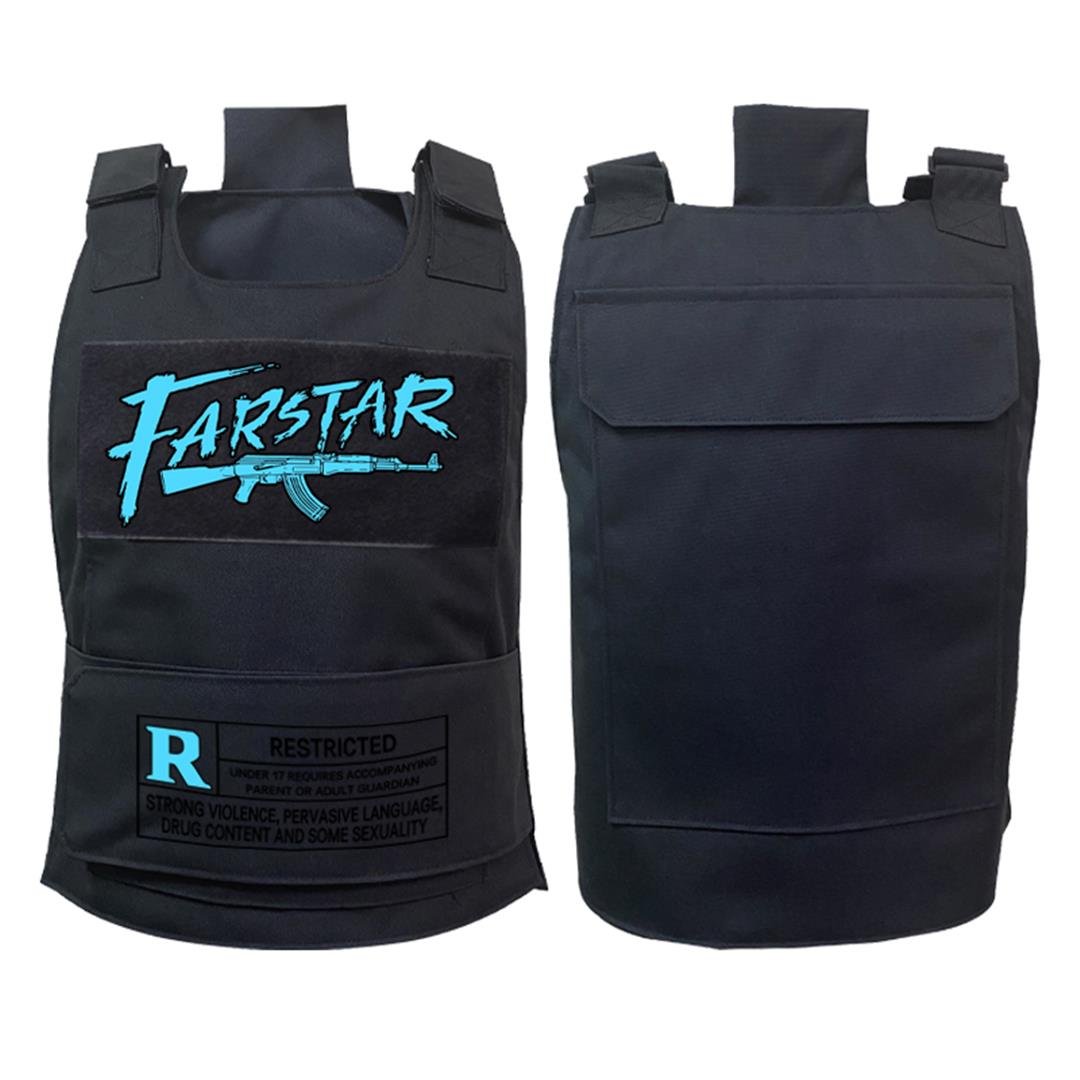
Paintball teams live and die on looking like a unit at the staging line. A custom vest makes that effortless: your team name across the back, player numbers or call signs on velcro panels you can swap between games, and sponsor logos front and center if you run one. Velcro-backed patches also solve a practical problem — you can pull a flashy team patch for scenario games where low-profile matters, and slap it back on for tournament day. For placement rules that keep patches readable at distance, see our patch layout guide.
And yes, the attitude patches count too. A parody rating label or an oversized logo treatment is half the reason people ask where your gear came from.
Comfort details that decide long tournament days
Three details separate a vest you love from one that lives in your gear bag by mid-season:
- Adjustable shoulders and sides so the same vest works over a t-shirt in July and a hoodie in November.
- A padded, vented back panel — your spine takes contact in paintball, and padding plus airflow is the difference.
- Reinforced stitch points at every pod and pouch attachment, because paintball loads and unloads gear violently, hundreds of times a weekend.
Design it once, own the field
You already bring your own marker, your own mask and your own style of play. Your vest should be in that same category: yours. Pick the layout, pick the colors, add the patches that make your squad unmistakable at the break — and stop borrowing a stranger’s fit. Build your custom tactical vest at MARKYOURVIBE — Your Gear, Your Rules.
Frequently Asked Questions
Why do paintball players need a vest built for the sport?
Paintball is a sprint, slide and crouch sport, so generic gear fails in three specific ways. Loose pods bounce out on the first hard cut, anything dangling below the waistline snags on bunker edges and branches, and a non-vented vest turns a summer scenario game into heat stress. A vest built for paintball uses tight elastic pod retention, keeps nothing hanging low, and vents at the back panel.
How many paint pods should a vest carry?
Carry the pods you can actually reach with a mask limiting your downward vision. Most speedball players run four to seven pods across the front where the hands already go, while woodsball players add a pod pack or utility pouch on the cummerbund for longer games. Extra capacity you cannot reload by feel only slows you down.
What is the difference between speedball and woodsball vest setups?
Speedball setups stay light, tight and minimal, because games are short and movement is constant: pods up front, nothing on the back, no loose straps. Woodsball setups accept more weight for longer games, adding utility pouches, a squeegee or barrel swab slot, a radio pocket and sometimes a hydration carrier on the back panel.
How should a paintball tactical vest fit?
Fit the vest snug and high enough that it does not shift when you dive or drop a knee. You should be able to shoulder a marker, sprint and slide without pods rattling, and the side straps should tighten without restricting your breathing. A vest that moves independently of your torso will throw off reloads you have practised.
Can I put my team logo on a paintball vest?
Yes. MarkYourVibe prints your own artwork, team mark or callsign onto a made-to-order tactical vest, so you choose the base color, the print placement and the pod layout. There is no minimum order quantity, and orders ship worldwide, including the United States.
Before you order: Artwork Guide · Size Guide
Ready to design your own?
Upload your artwork, preview it on the vest, and order one piece or a matching set.
Ordering for a team? Request a team quote.