
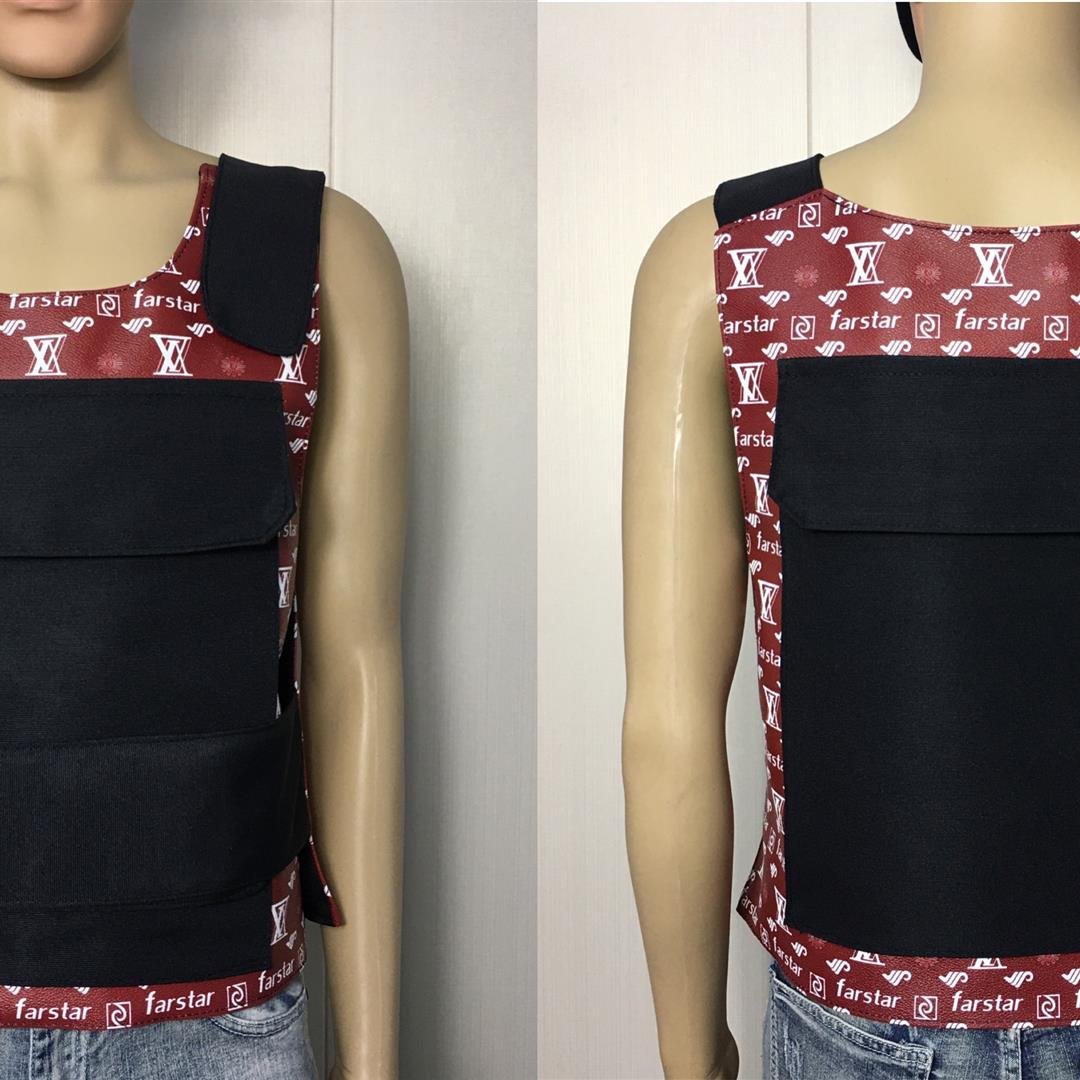
Pattern is the first thing people notice about a vest — before the pockets, before the straps, before the patches. Two vests cut from the exact same template can look like completely different products depending on what’s printed on them. A red bandana paisley print reads loud and streetwise. Woodland camo reads outdoorsman. A repeating monogram reads luxury. At MARKYOURVIBE, every vest starts as a blank canvas, so the pattern decision is the single most important call you’ll make. Here’s how to make it well.
Start with where you’ll actually wear it
Before you fall in love with a print, be honest about the vest’s job. A vest for airsoft weekends lives around dirt, brush, and greenery — which is exactly why camo patterns were invented. A vest for concerts, skate parks, or festivals has no environmental job at all; its only job is to look incredible in photos, which is where bold prints like paisley, flag-inspired bandana patterns, or graphic mashups win every time.
If your vest splits time between both worlds, pick a pattern with a darker base color. Dark bases hide scuffs and sweat, and they let a busy print stay interesting without screaming for attention. Our complete guide to choosing a custom tactical vest covers more of these use-case questions if you’re still deciding on the base style itself.
Paisley and bandana prints: loud, warm, and full of character
Paisley has travelled from Persian textiles to cowboy bandanas to modern streetwear, and it has never really left. On a tactical vest, a bandana-style paisley print does something clever: it softens the military silhouette with a rock-and-roll edge. The swirling teardrop shapes also create visual texture, which means minor wrinkles, dust, or wear simply disappear into the pattern.
Paisley works best when it’s contrasted, not matched. The vest in the photo above pairs a rich red paisley body with solid black mag panels and straps — that contrast is what keeps the print from overwhelming the eye. When you design yours, keep at least one large solid-color zone (chest panel, back panel, or both) so the pattern has a frame.
Camo: the classic that keeps reinventing itself
Camo isn’t one pattern; it’s a family. Woodland camo says traditional outdoors. Digital pixelated camo says modern gaming and airsoft. Tigerstripe says vintage military collector. Multicam-style gradients say current-gen tactical fashion. Because camo palettes are mostly muted greens, tans, and greys, camo vests are the easiest to coordinate with the rest of an outfit — they behave almost like a neutral.
The trade-off is individuality. Camo is recognizable precisely because so many people wear it. If you want camo but still want to stand out, ask for a recolored version: a camo pattern rendered in red and black, or in blue and grey, keeps the tactical texture while making the vest unmistakably yours.
Monograms and repeating logos: the luxury route
Repeating monogram prints — the kind made famous by luxury fashion houses — turn a vest into a statement piece. The pattern reads as texture from a distance and as branding up close, which is exactly the effect high fashion pursues. This route works beautifully with metallic accents, gold hardware, and minimal color palettes.
One warning: keep the logo set simple. Two colors and one repeating mark is elegant; five colors and three competing marks is noise. If you’re building a vest around a monogram print, it’s worth reading our breakdown of custom tactical vest design ideas to see how layout and restraint work together.
Full-color graphics: maximum impact, plan it carefully
Sublimated full-color printing means photographs, illustrations, and gradients can cover the entire vest. This is the route for fan art, character designs, scenery, and anything else a repeating pattern can’t express. The rules that matter here are contrast and resolution: text needs to sit on a contrasting background zone, and low-resolution artwork that looks fine on a screen will blur badly when printed across a whole torso panel.
A practical habit is the arm’s-length test. Print your artwork on a normal sheet of paper, tape it to a wall, and step back two meters. If the design still reads clearly at that distance, it will read on a vest.
Mixing patterns without creating chaos
Advanced builders often combine patterns — paisley body, camo panels, striped webbing. The trick that keeps combinations from collapsing into mess is the 60/30/10 rule: one dominant pattern covers roughly 60% of the vest, a secondary pattern covers 30%, and a solid accent color takes the final 10%. Keep the two patterns in the same temperature family (both warm, or both cool) and the vest will look intentional rather than accidental.
Whatever pattern you choose, remember that patterns live on fabric, and fabric lasts longer with basic care. Our tactical vest care and maintenance guide explains how to keep prints vivid for years.
Ready to pick your pattern?
Patterns are personal — that’s the whole point of custom gear. Whether you land on paisley, camo, a monogram, or a full-color graphic, the team at MARKYOURVIBE can print your choice onto real, hard-wearing tactical fabric with pockets and fit adjustments that actually work. Browse the design options at markyourvibe.com and build a vest that’s as loud, subtle, or luxurious as you want it to be. Your Gear, Your Rules.
Frequently Asked Questions
What is the best pattern for a custom tactical vest?
The best pattern depends on where you wear the vest. Camo suits outdoor, airsoft and range use. Paisley and bandana prints suit streetwear, festivals and music events. Monograms and repeating logos suit teams, brands and unit identity. Full-color graphics give the strongest visual impact. MarkYourVibe prints any of these on a made-to-order vest.
Can I put my own pattern anywhere on the vest?
Yes. MarkYourVibe prints your artwork on the front, back, shoulders and pocket areas of the vest, so you control placement, scale and repeat coverage before production starts.
Will a printed pattern fade or crack on a tactical vest?
Printed patterns hold up well when the vest is cared for correctly. Wash cold on a gentle cycle, avoid bleach and fabric softener, and air dry instead of using high heat. This protects both the fabric and the print.
Is there a minimum order for a patterned custom vest?
No. There is no minimum order quantity. You can order a single patterned vest or a full bulk run for a team, and every unit gets the same print quality.

4 Comments on “From Paisley to Camo: Choosing Your Custom Tactical Vest Pattern”